January 15, 2026
January 15, 2026
Dreaming of a La Quinta home where your morning coffee comes with mountain silhouettes and your evenings end in desert sunsets? Choosing the right view lot is about more than a postcard panorama. In our climate, sun angles, wind patterns, and mountain proximity shape daily comfort, maintenance, insurance, and long-term value. This guide shows you how to evaluate sun, wind, and mountain factors so you can enjoy the view you love without surprises later. Let’s dive in.
La Quinta sits on the eastern floor of the Coachella Valley, tucked against the Santa Rosa and San Jacinto Mountains. That setting delivers striking mountain, valley, and golf-course views. It also creates microclimates that change how heat, wind, and shade behave from one street to the next.
Summers are hot with low rainfall, and seasonal wind events can roll through the valley. For a quick climate refresher, review the NOAA climate normals for the Coachella Valley and the NWS overview of Santa Ana winds. With this context, you can choose a lot that matches the way you live.
If solar power matters to you, assess shading and roof orientation early. You can estimate production and losses with the NREL PVWatts calculator and visualize sun paths using the NOAA Solar Calculator.
In summer, the sun is high and shadows are shorter. In winter, the sun sits lower, and nearby mountains or tall structures can cast longer morning or late-afternoon shadows. Lots closer to the foothills may lose winter sun earlier in the day, which can reduce natural warmth on patios and affect solar performance.
La Quinta’s winds are shaped by mountain-valley circulations and regional corridors. Daytime upslope breezes and nighttime downslope flows create regular shifts. When regional pressure patterns set up, the valley can see stronger winds, and autumn to winter brings Santa Ana events that are hot and dry. For context on these episodes and timing, track National Weather Service forecasts and the NWS overview of Santa Ana winds.
Mountain views are premium, but not always permanent. Future construction, tree growth, and golf-course changes can alter what you see. There is no automatic legal right to a view in California. Reliable protection comes from recorded easements or CC&Rs with enforceable height and vegetation rules. Always review HOA design guidelines and the subdivision’s recorded documents.
Lots near the foothills can sit in or near higher wildfire-risk zones. This can influence insurance, materials, and defensible-space requirements. Start with the Cal Fire maps to understand designations and best practices: check your parcel on the Cal Fire Fire Hazard Severity Zone maps. When Santa Ana winds arrive, expect lower humidity and faster fire spread potential.
At the foot of the mountains, slope and drainage need attention. Geotechnical reports are standard for hillside builds. You may also want to check for past grading permits, debris flow history, and any engineered retaining structures. If your lot is near washes or drainage paths, verify flood designations on the FEMA Flood Map Service Center.
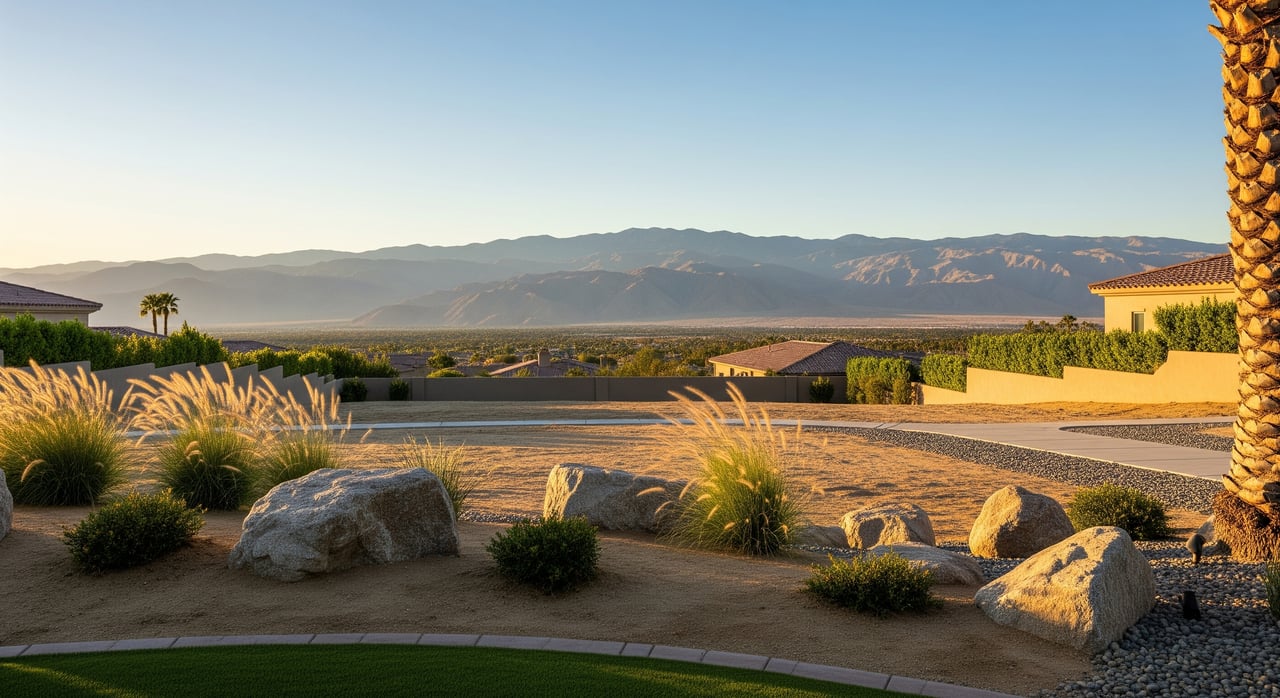
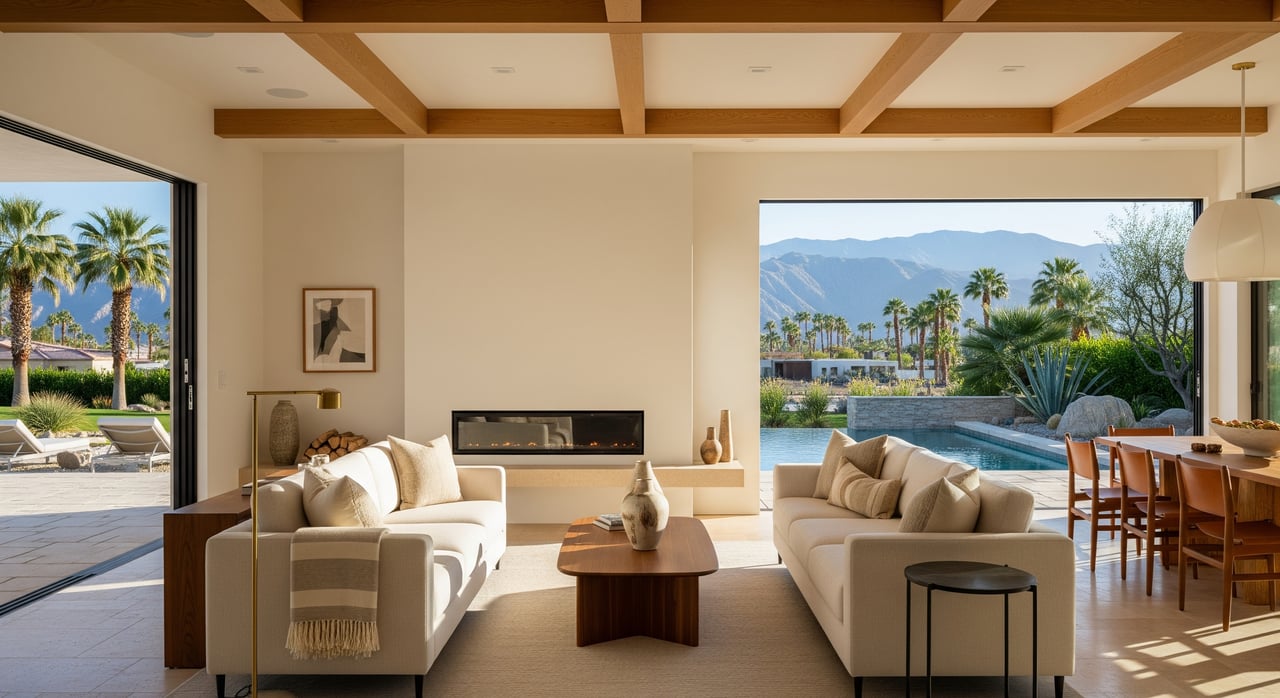
Frame your best views with large windows, then control heat and glare. Combine high-performance low-e glazing with roof overhangs, vertical fins, and operable shades. Place living areas and outdoor rooms where you want to spend the most time, such as east-facing patios for morning coffee or west-facing lounges for sunset cocktails.
South and west roof planes often produce the strongest solar output, but you do not have to choose between PV and a clean mountain horizon. Consider low-profile arrays or ground-mounted panels placed out of primary view corridors. Ask your designer to show options that meet your energy goals and preserve the skyline you value.
Desert-appropriate landscaping can soften gusts without blocking sightlines. Low native shrubs, strategic berms, and partial-height screen walls reduce wind while keeping mountain lines open. If your lot slopes, well-placed retaining walls and terraces help with erosion control. Confirm permit needs before you build.
Site visits
Documents and records
Technical reports
Questions to ask
Not all views command the same premium. Panoramic mountain or valley vistas often bring higher value than partial or seasonal views. Golf-course outlooks can be desirable, though they depend on course maintenance and policies. Value also tracks with permanence: protected sightlines through CC&Rs, easements, or adjacency to open space are more durable.
Buyers also pay for usability. A sunset view that comes with blistering afternoon heat may underperform one with smart shade and a breeze-protected patio. When you sell, highlight what you solved: view-friendly landscaping, effective shading, filtration that manages dust, and any documentation that proves view protections or risk mitigation.
Ready to find a lot that fits your lifestyle without surprises? If you want a local, strategy-first partner to evaluate sun, wind, mountain proximity, and view protections, reach out to Sari. We will walk the site with you, review the paper trail, and help you invest with confidence.

With over 20 years of experience in real estate, combined with my earlier work in finance and law, I bring a level of expertise that few can match. But more than that, I pride myself on building lasting relationships with my clients. I’m here not just to get the job done, but to make it an extraordinary experience.